Why Buyers Choose Las Catalinas: Living, Investing, and Owning in Costa Rica’s Car-Free Beach Town
We get asked about Las Catalinas more than almost any other community on the Guanacaste coast. Buyers who have never seen it want to know what the fuss is about. Buyers who have seen it usually want to know what it costs.
Here is the full picture: the five reasons people choose it, what is actually on the market right now, and — because you deserve the complete version — the trade-offs worth understanding before you buy.
First, What Las Catalinas Actually Is
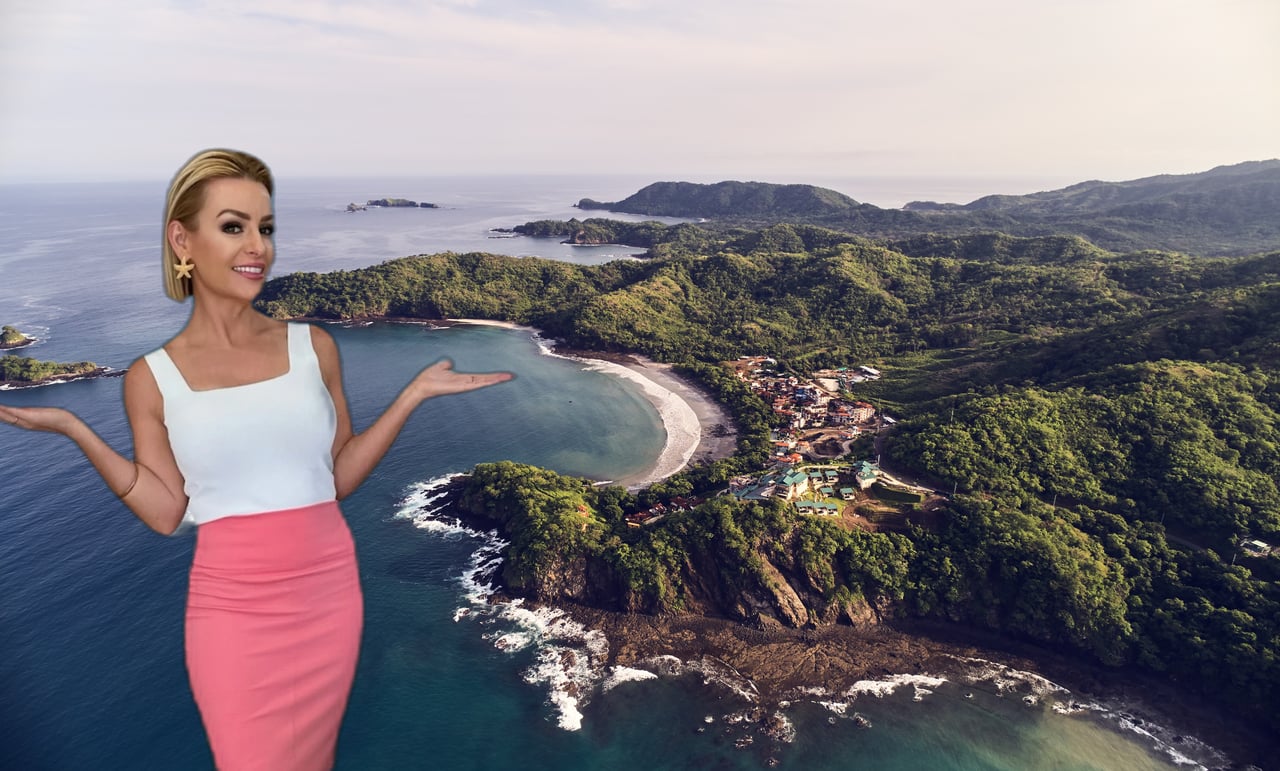
Las Catalinas is not a resort and it is not a conventional beach town. It is a planned, car-free town founded in 2006 by American entrepreneur Charles Brewer, built on the principles of New Urbanism.
Brewer is not a hospitality developer by background. He founded the internet service provider MindSpring, and after that built Glenwood Park, a walkable mixed-use neighborhood in Atlanta. Las Catalinas applies the same thinking to a stretch of Pacific coastline past Potrero and Flamingo, at the literal end of the coastal road. Roughly 85% of the surrounding land is held as preserved tropical forest, laced with trails.
You park at the edge of town. From there, everything is on foot or by bike. That single decision shapes everything else about the place.
1. The Beachfront Lifestyle
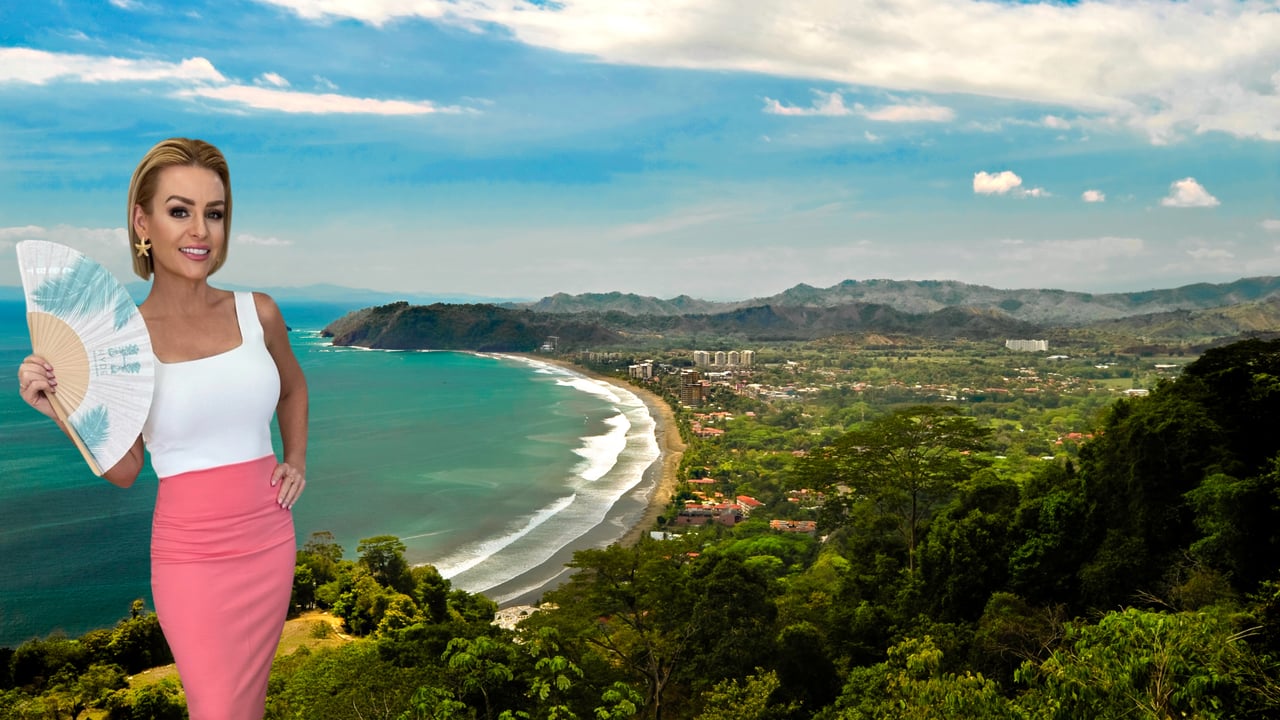
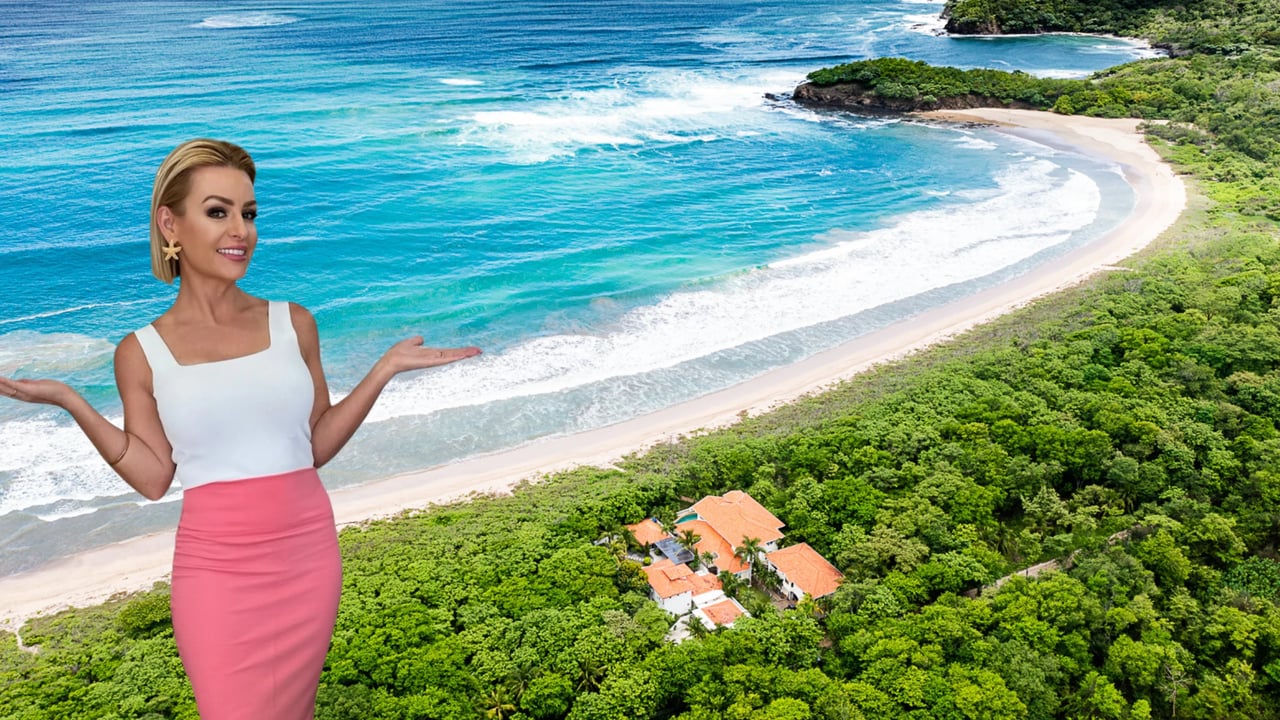
The town fronts two beaches: Playa Danta and Playa Dantita. Danta is the main beach — calm, swimmable, with the town built right down to it. Dantita is smaller and more secluded, reached on a short hike north over the headland.
What makes the lifestyle here different from Flamingo or Tamarindo is not the beach itself. Guanacaste has no shortage of beautiful beaches. It is the distance between your front door and the water, and the fact that you cover it without a car. Morning swim, coffee in a plaza, back home, all on foot. Because no highway passes through, the beach stays secluded even as the town has become one of Guanacaste’s most sought-after addresses.
Families with young children consistently tell us this is the single biggest quality-of-life difference — the streets themselves are safe in a way a normal beach town cannot offer.
2. The Architecture
This is where Las Catalinas separates itself, and it is worth understanding why the buildings look the way they do.
The design draws on medieval European hill towns — places like Èze in France and the Cinque Terre in Italy — adapted to Latin American vernacular and a tropical climate. Narrow cobblestone streets, shaded plazas with fountains, painted homes stacked along stair-stepped lanes down a steep hillside so that nearly every house gets a view. The stated goal from the outset was for the town to feel as though it had grown over centuries rather than been built in a decade.
This is not marketing language applied after the fact. Beach Town, the original neighborhood, won a 2022 Charter Award from the Congress for the New Urbanism in the Neighborhood, District and Corridor category — recognition from the professional body that defines the discipline. The design team has included urban planner Douglas Duany and TSW Design, and the town retains its own architects and an Architectural Review Board that approves every project.
For buyers, the practical point is this: the design standards that make the town beautiful are the same standards that constrain what your neighbor can build. That control is a large part of what protects value here — and it is also a genuine restriction on what you can do with your own property. Both things are true.
4. The Amenities
The Beach Club on Playa Danta is the social center — ocean-view pools with food and drink service through to sunset.
Two acclaimed hotels anchor the hospitality scene: the adults-only Casa Chameleon and the Santarena. They matter more than they might seem, because they bring restaurant quality, service infrastructure, and a rental market that a purely residential community would not sustain.
Within a few minutes’ walk through the plazas you have cafés, restaurants, galleries, boutiques, a gourmet grocery with a wine cave, and a spa. The retail core has expanded steadily — recent additions include an urgent care clinic with a physician available six days a week, an interior design studio, an appliance showroom, and a contemporary art gallery showing Costa Rican artists.
The urgent care clinic deserves particular mention. For buyers weighing full-time or long-stay residence — especially retirees — on-site medical access is often the detail that settles the decision.
And for everything the town does not have, Potrero is about 6 km away and Flamingo about 8.5 km. Groceries, banks, pharmacies, and a much wider restaurant scene are all inside a 20-minute drive, even though the town itself feels worlds away.
5. The Events and the People
A car-free town produces a specific kind of social life. You run into people. Plazas function the way they were designed to function, and residents genuinely know their neighbors by name.
The programming supports it: live music, sporting events, cultural festivals, and group rides that end with drinks in town. Las Catalinas also hosts Noches de Guanacaste, an annual culinary festival bringing together chefs from across the province to spotlight regional ingredients and traditional technique — its third edition ran in July 2026.
The resident mix is international and skews toward people who chose this town deliberately rather than stumbling into it. Brewer’s own background means a notable share of owners are entrepreneurs and former founders. That shapes the social texture more than any amenity does.
The Neighborhoods
Las Catalinas is still being built out, and where you buy matters as much as what you buy.
Beach Town — the original walkable core, completed over more than a decade. Roughly 150 single-family homes plus mixed-use and civic buildings packed into 21 acres along the Pacific. This is where the beachfront paseos, the most central homes, and the restaurants and shops are. Living here means stepping out your door into the village.
El Prado — the newer, larger hillside neighborhood rising behind Beach Town, planned to be several times its size. Ocean-view homes plus buildable homesites, and the most accessible entry point into the town. This is the main path to ownership for buyers who want a Las Catalinas address with room to build.
Lantana Residences — ocean-view homes and flats built into the El Prado hillside, combining the walkable town lifestyle with elevated Pacific views.
Casa Chameleon Residences — a limited collection of branded, beachside condominium residences tied to the Casa Chameleon hotel. Turnkey luxury steps from Playa Danta, with hotel-style services.
What It Costs: Current KRAIN Inventory
Las Catalinas spans a wider range than most buyers expect. Here is what we currently have listed, grouped by tier.
Beachfront and trophy estates
Villa Santorini — $9,800,000. Four-level hillside ocean-view estate, 8 bed / 10 bath, 11,700 sq ft. A KRAIN exclusive.
Villa Sympatheia, 7 Punta Penca — $8,250,000. Oceanfront estate, 7 bed / 7 bath, 857 m².
27 Cartagena — $5,900,000. Luxury beachfront villa, 7 bed / 9 bath, 11,577 sq ft.
Casa de Tom, 15 Paseo del Mar — $5,200,000. Beachfront villa on Paseo del Mar, 5 bed / 6 bath, 597 m².
Larger villas and branded residences
Casa Chameleon Residences, Villas 2 & 3 — $4,250,000. Branded beachside residences, 5 bed / 6 bath, 5,126 sq ft.
Casa Alegria — $3,990,000. 5 bed / 6 bath, 5,000 sq ft.
Lot 140, Camino de los Montes — $3,500,000. Ocean-view home in El Prado, 4 bed / 5 bath, 376 m².
15 Calle Virginia — $3,000,000. Ocean-view retreat, 4 bed / 4 bath, 446 m².
Casa Chameleon Condos, A-601 — $2,200,000. Branded beachside condominium, 3 bed / 4 bath, 2,832 sq ft.
The most accessible homes on the market
7 Calle La Ronda — $2,195,000. Three-story ocean-view hillside home, 5 bed / 5 bath, 4,100 sq ft. A KRAIN exclusive.
9 Calle Cartagena — $1,799,000. Ocean-view retreat steps from the Beach Club, 4 bed / 5 bath, 3,649 sq ft. A KRAIN exclusive.
25 Paseo Del Mar — $1,699,000. Currently the best-priced beachfront home in Las Catalinas, 4 bed / 3 bath, 310 m², with a rooftop terrace. A KRAIN exclusive.
Casa Acuarela, 17 Calle Cartagena — $1,690,000. Steps from the beach and Beach Club, 4 bed / 5 bath, 3,014 sq ft. A KRAIN exclusive.
The Honest Trade-Offs
We would be doing you a disservice if we only listed the reasons to buy. Las Catalinas is a strong fit for a particular kind of owner and a poor fit for others.
It is expensive. Entry pricing sits above much of the surrounding Guanacaste market. You are paying for design, planning, and scarcity that a conventional beach town does not offer — whether that premium is worth it depends entirely on how much you value those things.
It is curated. Architectural review, design standards, and HOA governance are real constraints. Owners who want to build what they want, when they want, will find this frustrating. Owners who want their neighbor held to the same standard will find it reassuring.
The nightlife is quiet. If you want bars and late nights, Tamarindo is the better fit and it is not close. Evenings here end earlier and more civilly.
Supply is deliberately constrained. The master plan limits how much gets built. That supports values over time, but it also means the home you want may simply not be available when you want it.
If you want a more traditional beach town with fewer rules and a lower entry point, Potrero is minutes away and a genuinely different proposition. Our guide to the best beach towns in Guanacaste compares eight of them side by side.
Who Actually Buys Here
In our experience, buyers fall into a few recognizable groups. Families who prioritize safe streets and want children able to move independently. Active buyers — riders, runners, hikers — who came for the trails and stayed for the town. Retirees and semi-retirees who want walkability, medical access, and a real community rather than a gated compound. And investors drawn to the short-term rental performance that the hotels and the design reputation support.
What most of them have in common is that they were not shopping for a house. They were shopping for a way of living, and this town is one of very few places deliberately engineered to produce it.
Why Buy With KRAIN
We have led Guanacaste’s Gold Coast since 2013, under an American attorney turned Costa Rica realtor. In a master-planned, HOA-governed town like Las Catalinas — with its own architectural rules, rental programs, and resale dynamics — that legal rigor matters. We will make sure you understand exactly what you are buying, in which neighborhood, and on what terms, before you commit.
Contact KRAIN and we will walk you through current inventory, what comparable properties are trading for in neighboring towns, and a property’s actual rental history rather than a projection. If Las Catalinas is not the right fit for you, we will tell you that too.